
Aspect Ratios
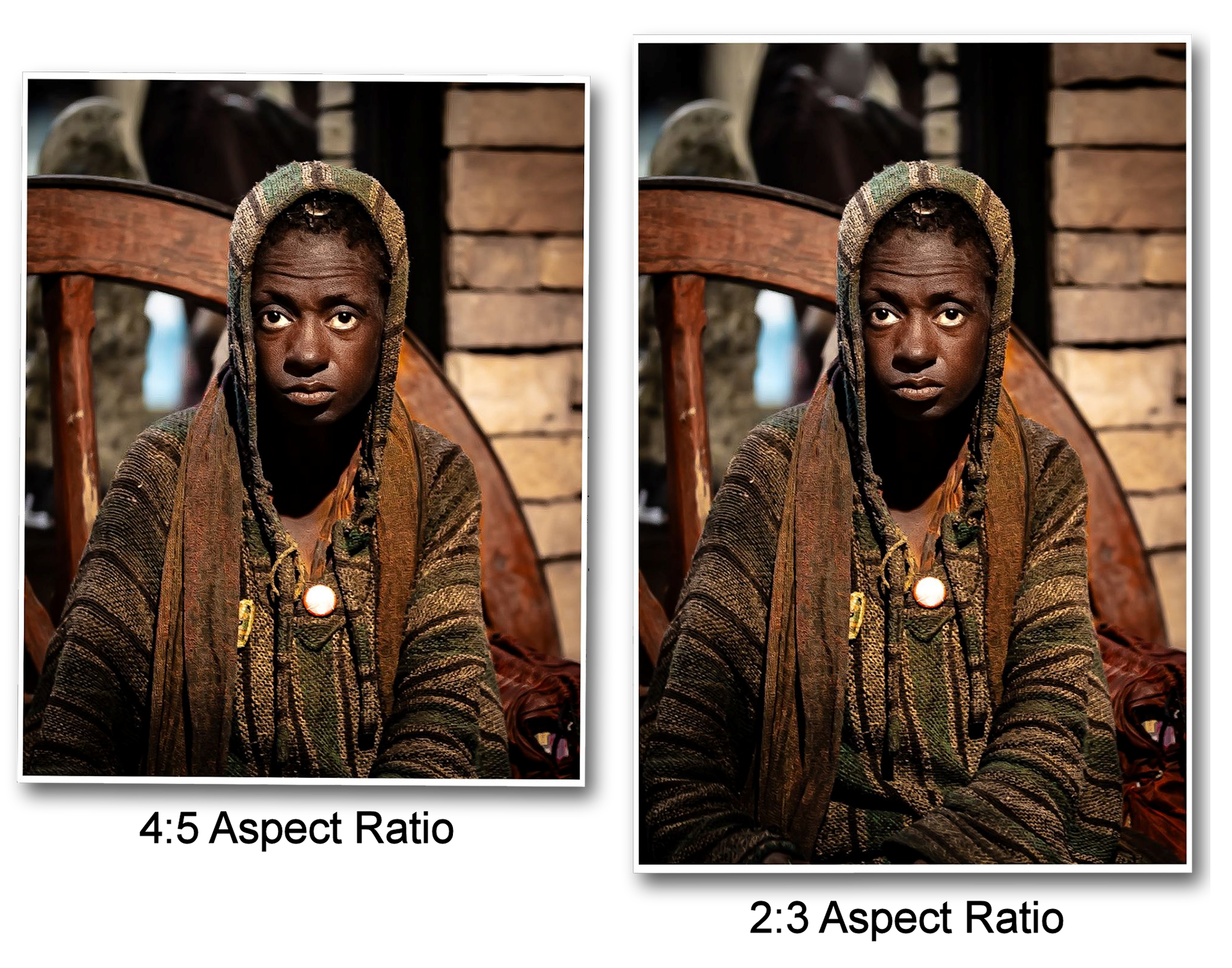
Why I Choose the 4:5 Aspect Ratio
The 4:5 ratio is where my film roots, portrait instincts, and modern storytelling all meet in perfect balance.
TL;DR — THE SHORT VERSION
I compose and deliver most of my work in 4:5 because it’s the classic portrait ratio. It fits standard print sizes perfectly: 4×5, 8×10, 16×20, 24×30. It looks best on phones and social media feeds. It avoids the constant cropping compromises of 5×7 and 4×6. My cameras may capture in 2:3, but my eye composes in 4:5. It’s not a trend — it’s my film-rooted, portrait-first way of seeing. In short: 4:5 is where my images live most naturally — on screen, in frames, and in feeling. For video, the philosophy stays the same: I choose the frame that serves the story — 9:16 for short-form vertical content, and 16:9 or cinematic ratios for longer visual narratives.
Every photographer has a visual fingerprint. Mine lives in the 4:5 aspect ratio
At first glance, an aspect ratio might seem like a purely technical choice — just numbers and dimensions. But in reality, it shapes how a story feels, how a subject breathes inside the frame, and how an image lives in the real world.
For me, 4:5 is not a trend. It is a return to the roots that shaped my eyes long before social media ever existed.
FROM FILM TO DIGITAL — A VISUAL LINEAGE
My photographic foundation began in the film era, working with formats where balance, structure, and intention mattered deeply. Large format 4×5 cameras and medium format portrait systems trained my eye to see in proportions that feel calm, grounded, and powerful. That visual muscle memory never left.
Even today in a digital world, I still compose with that same instinct.
The 4:5 ratio carries the same elegance that once lived on glass negatives and darkroom enlargers — now translated into pixels.
WHY 4:5 FEELS RIGHT FOR PORTRAITS
The 4:5 frame simply fits the human story better:
● Faces feel centered and intentional
● Bodies remain proportional without excess empty space
● Vertical compositions feel strong without feeling cramped
● The viewer’s eye is guided naturally through the image
● It is a ratio that feels designed for people, not just scenes.
THE MODERN REALITY: WHERE PHOTOS ARE SEEN TODAY
The vast majority of images today are viewed on phones, not on walls. Social media platforms display vertical images more prominently, making them feel larger, more immersive, and more impactful in the feed. The 4:5 ratio happens to be the format that fills that space most beautifully.
In other words:
4:5 honors both my film-era instincts and the modern way people experience photography.
4:5 honors both my film-era instincts and the modern way people experience photography.
WHEN THE MEDIUM CHANGES, THE FRAME CHANGES
While 4:5 is the visual home of my still photography, video lives in a different world — and I treat it with the same intentionality.
For short-form video and social media reels, I work primarily in 9:16 vertical. Not because it’s trendy, but because it respects how people actually hold their phones. Vertical video fills the screen, removes distraction, and allows motion and emotion to live front-and-center without compromise.
For long-form video stories — including YouTube, Vimeo, and cinematic narrative work — I shift to 16:9 or wider cinematic and anamorphic ratios. These formats create breathing room. They invite the viewer to settle in, to observe, and to experience space, movement, and atmosphere in a way vertical video simply cannot.
Just as with still photography, the aspect ratio is never an afterthought. It’s a storytelling decision.
Different frames serve different purposes:
● 4:5 for still images meant to live on walls, in frames, and in memory
● 9:16 for intimate, immersive short-form motion on mobile screens
● 16:9 and cinematic ratios for longer visual narratives that unfold over time
The common thread isn’t the ratio — it’s intention.
I choose the frame that best serves the story, the medium, and how the work will be experienced in the real world.
WHAT THIS MEANS FOR MY CLIENTS
When I deliver your images:
● They are optimized to look stunning on phones and social platforms
● They feel intentional, balanced, and bold
● They are composed with both art and real-world viewing in mind
Behind every delivered image, the original high-resolution file is carefully preserved so your photographs always remain future-proof for printing, albums, and wall art if you ever choose to take them there.
You get the best of both worlds: modern impact and timeless integrity.
WHY 4:5 IS PERFECT FOR STANDARD PRINT SIZES & FRAMES
One of the quiet strengths of the 4:5 aspect ratio is how effortlessly it fits the most timeless and widely available print sizes in the world.
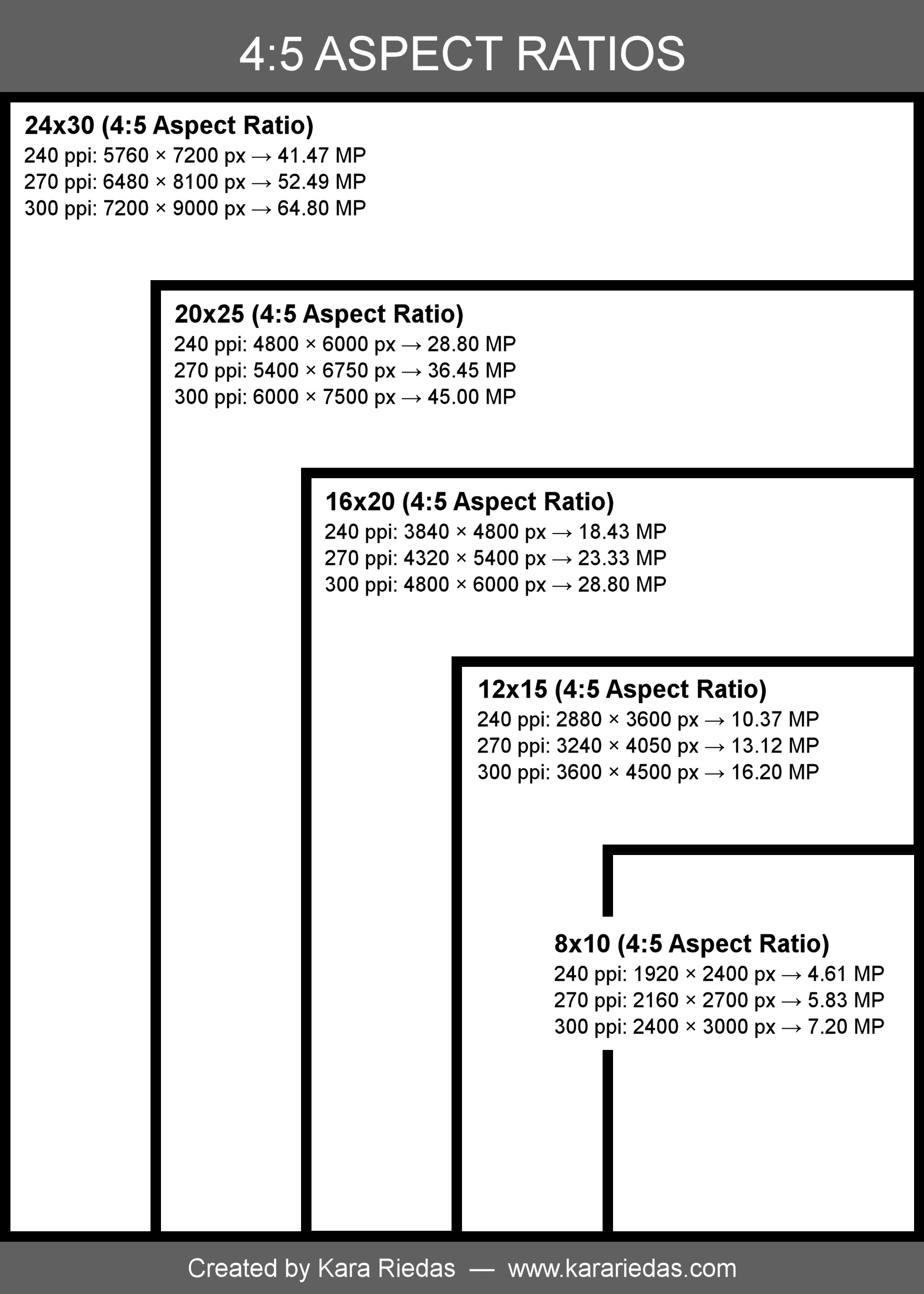
The 4:5 ratio is the native proportion for:
● 4×5
● 8×10
● 16×20
● 24×30
● 40×50
Because these sizes require no cropping, what I compose in-camera translates directly and faithfully to the final print. No trimmed hands. No lost headroom. No reimagining the edges of the frame after the moment has passed.
This also means your photographs drop cleanly into standard, off-the-shelf frames — without special ordering or custom matting.
In practical terms, 4:5 allows a photograph to move seamlessly from screen to print to frame without losing its original intention.
HORIZONTAL 5:4 — THE LANDSCAPE COMPANION TO 4:5
While much of my work is created in the vertical 4:5 portrait format, the same ratio also exists beautifully in the horizontal direction as 5:4.
Horizontal 5:4 is especially powerful for:
● Environmental portraits
● Raw photojournalism
● Unscripted street photography
● Documentary-style events
● Expansive landscapes
● Cinematic automotive
● Story-driven lifestyle scenes
● Interior and architectural stills
● Wide compositions that still need emotional presence
Unlike 16:9, which can sometimes feel stretched and distant, 5:4 keeps the viewer closer to the subject. It provides width without sacrificing intimacy.
THE 5×7 REALITY — THE IN-BETWEEN THAT NEVER QUITE FITS
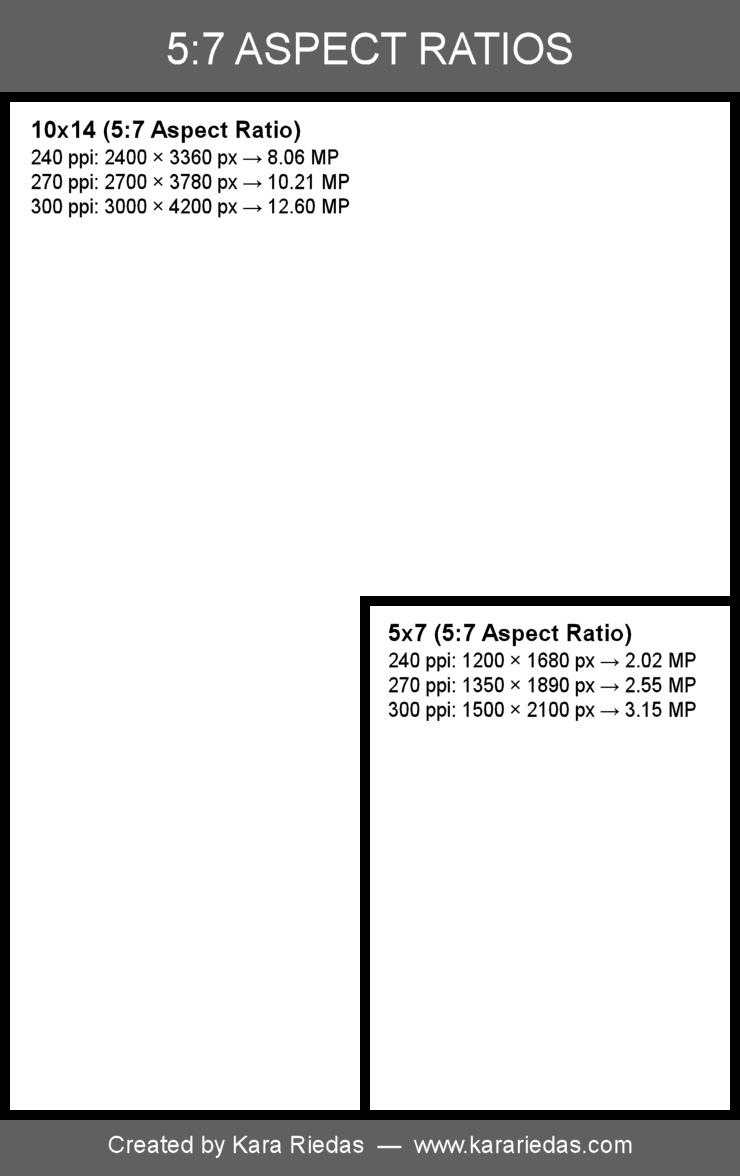
The 5×7 print size has always lived in a strange in-between space. It is neither native to full-frame digital cameras nor to classic portrait formats like 4:5. As a result, 5×7 always requires cropping.
This is why 5×7 often becomes the most compositionally frustrating print size:
● Something is always getting trimmed
● Headroom or hand placement often has to be sacrificed
● The image rarely feels exactly as it was originally envisioned
Because of this, I treat 5×7 as a derived format, not a master format.
ABOUT 16:9 FOR STILL PHOTOGRAPHY
The 16:9 ratio comes from the world of video and cinema. While it can be powerful for scenic views and environmental storytelling, it is not naturally suited for most portrait photography.
In still images, 16:9 often:
● Spreads subjects too thin across the frame
● Introduces excess empty space
● Reduces emotional intimacy
For that reason, I view 16:9 as a specialty storytelling tool, not a default photographic ratio.
A QUIET REBELLION AGAINST THE OLD 4×6
There was a time when nearly everything was printed as a 4×6 snapshot. I never loved how those proportions truncated the soul of a photograph.
The 4:5 ratio restores the breathing room that images deserve.
APS-C, FULL FRAME, AND WHY I STILL CHOOSE 4:5
Most modern digital cameras capture in the 2:3 aspect ratio inherited from 35mm film. Even though APS-C sensors (crop sensors) are physically smaller, the shape of the image remains the same.
But my instincts were never trained by 35mm alone.
My visual foundation was shaped by 4×5 large format and medium format portrait proportions, where balance is calmer and presence is stronger.
So while my cameras capture in 2:3, my artistic eye composes for 4:5.
THE 4×6 ERA — WHEN MACHINES DECIDED THE SHAPE OF OUR MEMORIES
The 4×6 print became dominant not because it was the most beautiful format, but because it was the most efficient for mass production.
There was a long stretch in photo history when nearly everything was printed as a 4×6 — not because it was the most beautiful photographic proportion, but because it was the most efficient. Companies like Kodak built an entire industrial pipeline around 35mm film and automated mini-labs. The 2:3 ratio of 35mm fit perfectly into high-speed machines designed for mass production, low cost, and maximum paper efficiency.
And just like that, the world was standardized.
That same 35mm ratio later became the foundation for digital SLR cameras, carrying the 2:3 proportion forward into the digital age. In other words, today’s DSLR sensors directly inherited their shape from yesterday’s 35mm film.
The problem is, beautiful composition was never the priority — speed was.
That is why 4×6 prints always felt just a little… off to me. The frame felt long and narrow. Portraits felt slightly compressed. The top and bottom of the story always seemed to be fighting for survival. Images rarely felt like they had room to breathe.
Those prints weren’t wrong — but they were born from machines and manufacturing, not from portrait tradition or artistic intent.
While the industry moved forward through 35mm, mini-labs, and eventually DSLRs and mirrorless cameras, my instincts never left the 4×5 world — where balance is calmer, structure is stronger, and presence comes before efficiency. Even when I’m shooting on modern digital cameras, I still see through the quiet, grounded proportions that large format trained into my eye.
It’s also worth noting that mirrorless cameras did not change the native shape of the image.
Full-frame and APS-C mirrorless bodies from brands like Canon, Sony, and Nikon still capture in the same 2:3 ratio inherited from 35mm and DSLRs — the mirror was removed, not the format. The notable exception is the Micro Four Thirds system, used by brands like Olympus and Panasonic, which natively uses 4:3. That format naturally lives closer to my 4:5 world, but for most modern cameras, choosing 4:5 is still a conscious artistic decision, not a factory default.
The 4×6 era taught the world how to consume photography quickly.
The 4:5 ratio taught me how to feel photography.
MY SIGNATURE RATIO
The 4:5 aspect ratio is not just a crop for me — it is a philosophy.
It represents:
● My film roots
● My studio experience
● My portrait-first approach
● My commitment to visual balance
● My respect for how images live in the modern world
It is the quiet thread that connects everything I create.
IN SIMPLE TERMS
I choose 4:5 because:
● It honors the classic portrait tradition
● It looks incredible on social platforms
● It supports the most timeless print sizes
● It avoids the constant compromises of in-between ratios
● And most importantly — it feels right
Photography is instinct before it is math.
And my instinct has always lived in 4:5.

Social Media (Facebook)
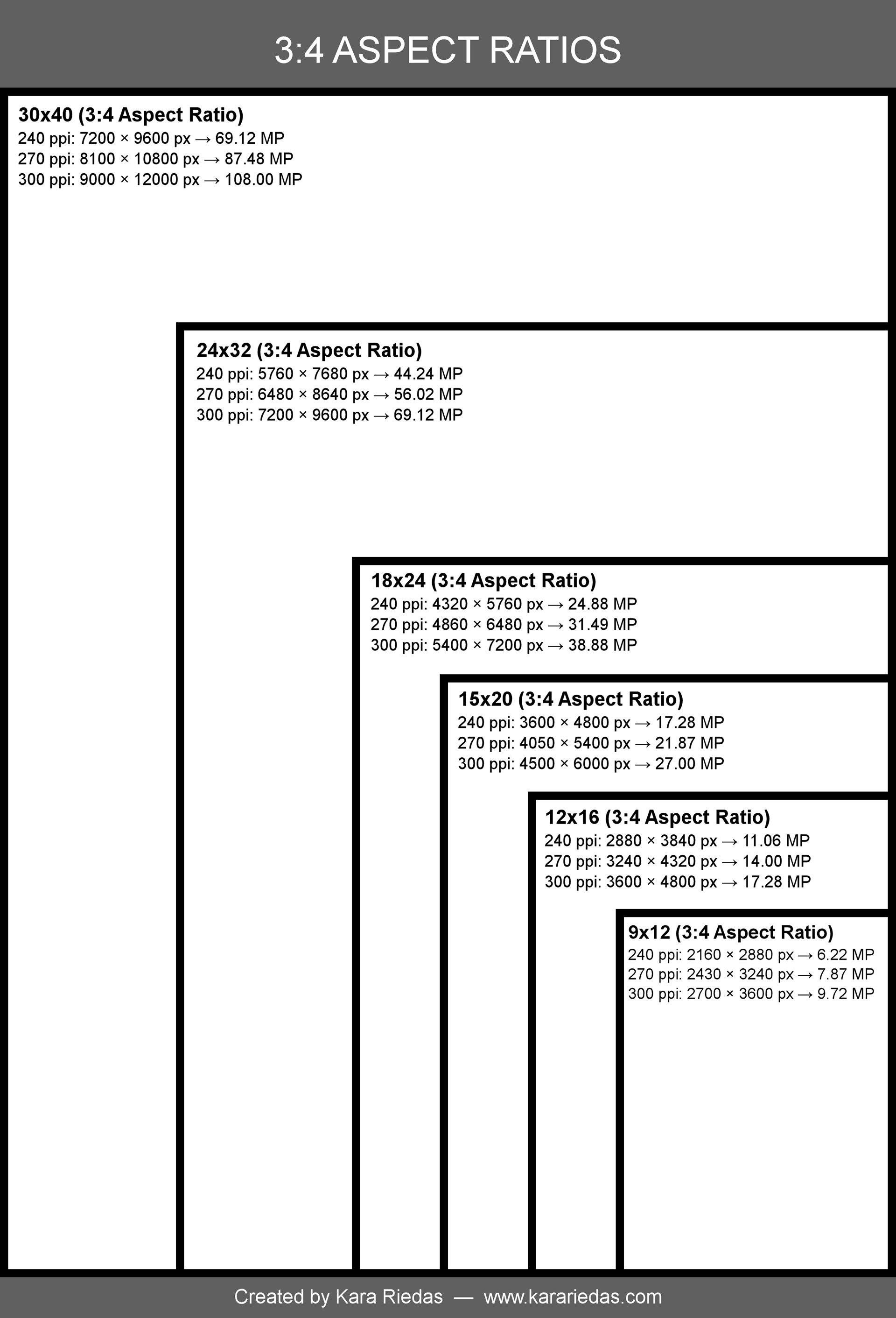
2:3 — 1365 × 2048 px → 2.80 MP
Social Media (Facebook)
3:4 — 1536 × 2048 px → 3.15 MP
Social Media (Facebook)
4:5 — 1638 × 2048 px → 3.35 MP
Social Media (Facebook)
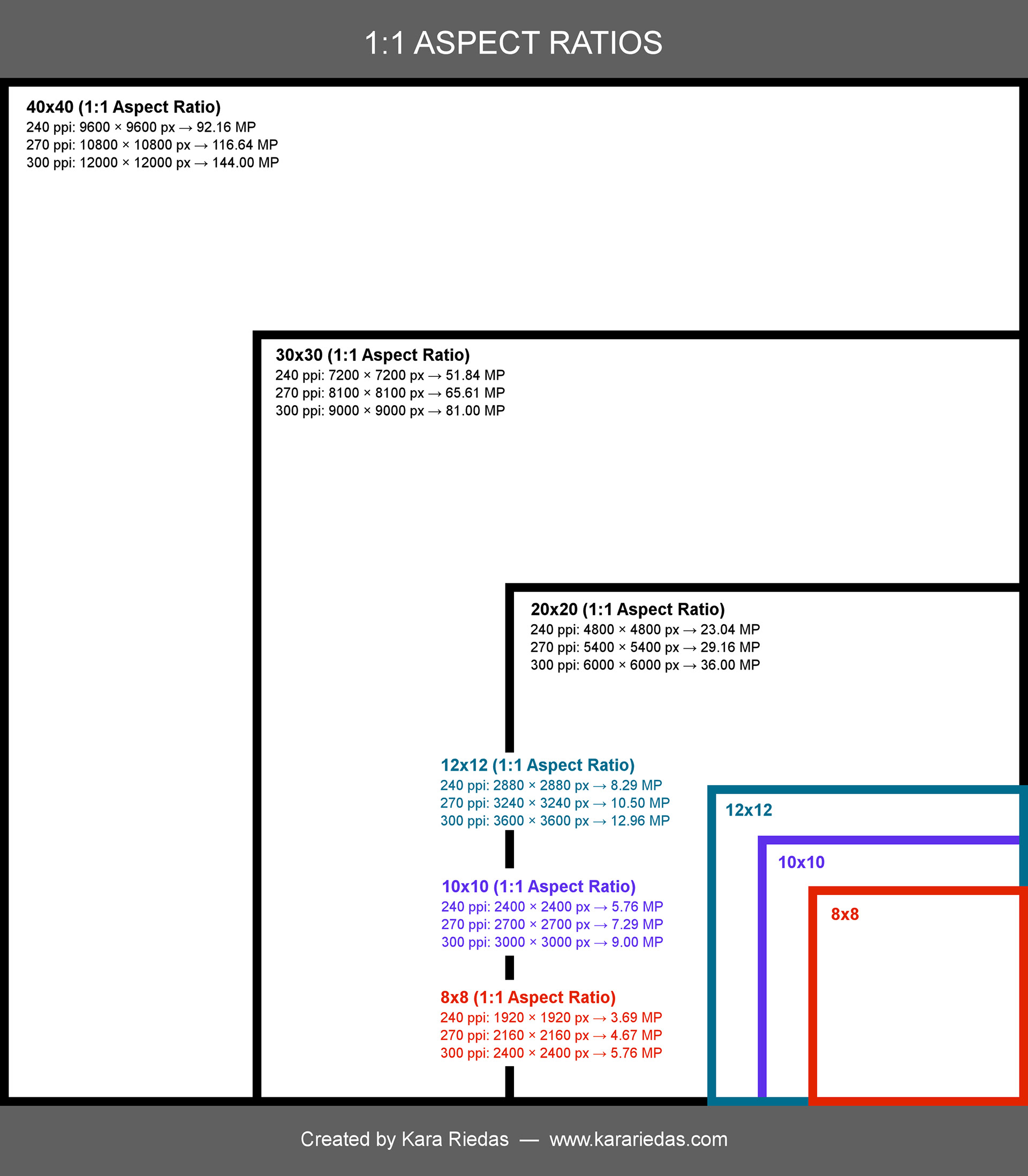
1:1 — 2048 × 2048 px → 3.35 MP
Social Media (Facebook)
5:7 — 1463 × 2048 px → 2.99 MP
Social Media (Facebook)
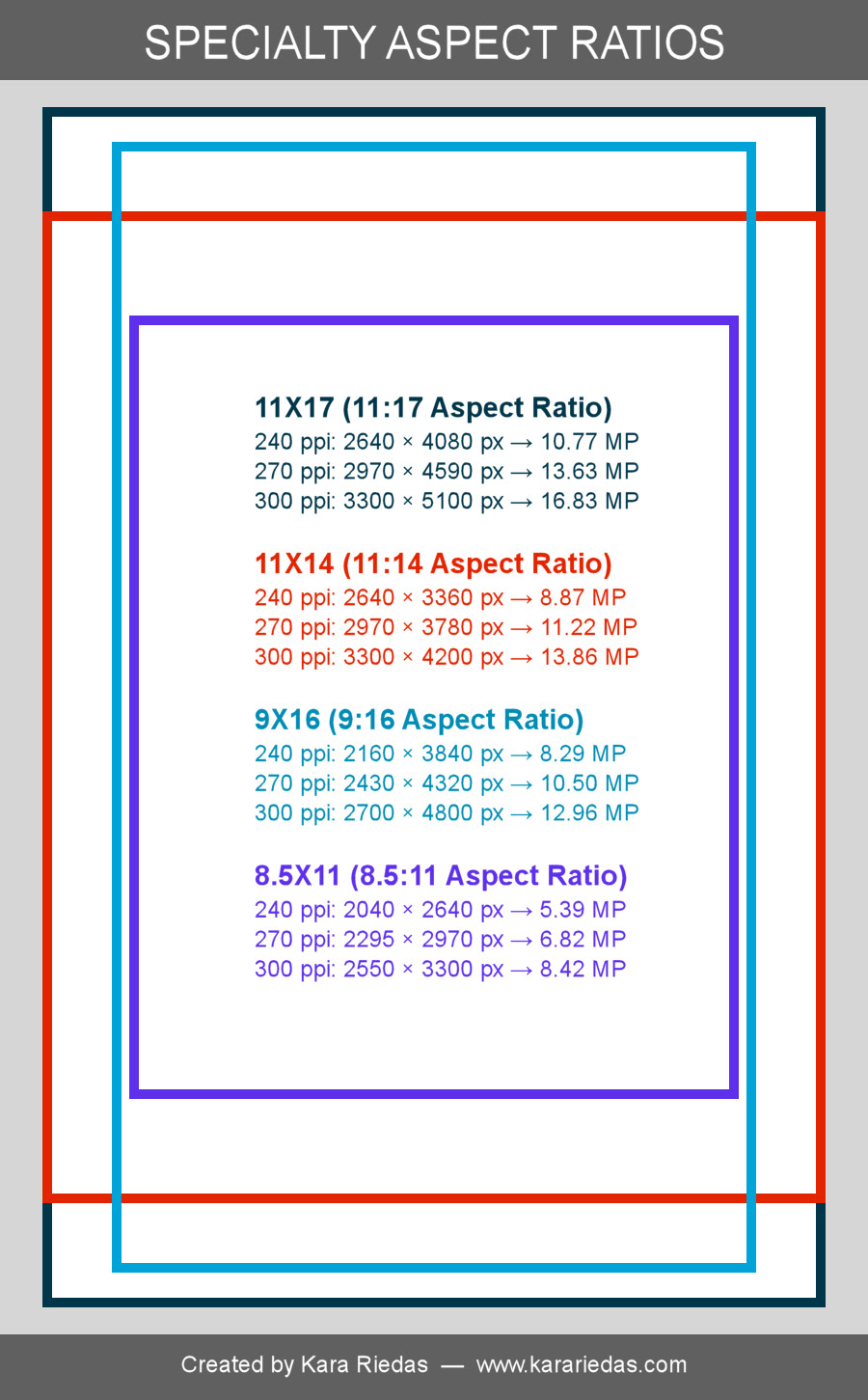
11:17 — 1463 × 2048 px → 2.99 MP
11:14 — 1609 × 2048 px → 3.29 MP
9:16 — 1152 × 2048 px → 2.36 MP
8.5:11 — 1582 × 2048 px → 3.24 MP